
From speakers to tablets to laptops to game consoles, in this modern world, the majority of us use electronics every day.
In fact, the ‘average British home has 28 connected devices’, meaning you likely have a range of electronics around your home.
If you’re wondering how to pack electronics and electronic equipment for moving house, our guide has got you covered.
If you fail to pack your electronics properly, you run the risk of your electronics becoming damaged during transit and you losing hundreds if not thousands of pounds.
To pack electronics for moving, you will need to:
- Remove the batteries and place them in resealable bags
- Keep cables and remote controls in a separate bag
- Remove any loose media
- Bubble wrap large electronics
- Place smaller electronics in protective cases
- Prepare a box with packing materials
- Pack and label the boxes
1. Remove The Batteries & Place Them In Resealable Bags
Before you can pack your electronics for moving house, you’ll first need to remove any unnecessary batteries and place them in separate resealable bags.
This is an important step to prevent any battery acid from leaking onto your electronics, or your electronics becoming damaged due to battery corrosion.
Taking this step will also allow you to track of which batteries belong to which electronic device.
2. Keep Cables & Remote Controls In A Separate Bag
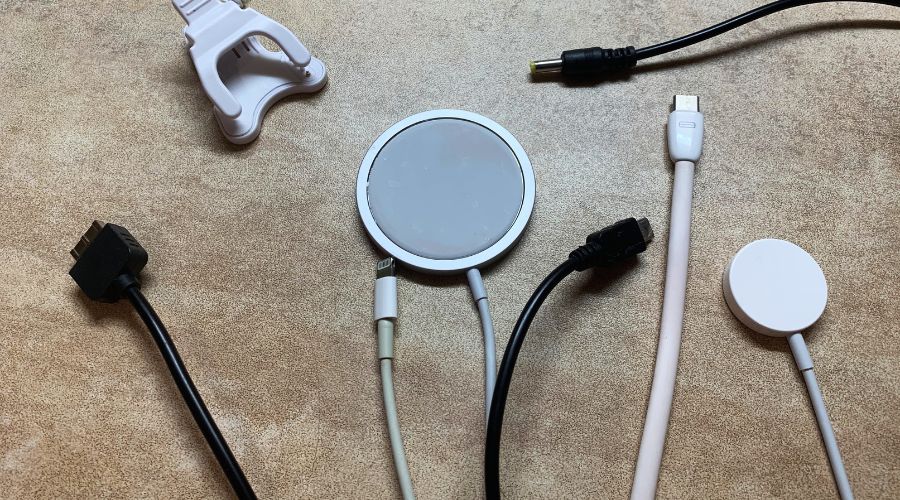
Next, you’ll want to keep any cables, chargers, and remote controls in a separate bag.
This will not only help you to keep your cables and remote controls organised but will also reduce the risk of you losing any throughout the moving process.

The ‘average British home has 28 connected devices’, meaning you likely have a range of electronics around your home.
3. Remove Any Loose Media
Whether you’re packing DVD players or game consoles, you’ll want to first remove any loose media.
This will not only protect the electronic equipment itself but will also ensure that you can keep all of your DVD and video game discs organised ahead of the move.
4. Bubble Wrap Large Electronics
Once you’ve removed any batteries from your electronics, it’s time to bubble wrap large electronics.
Bubble wrapping your electronics will help to absorb some of the shock caused during transit and will help to protect your electronics from getting damaged or broken.
Tape each of the corners down with packing tape to ensure that your electronics are secure and well-protected.
5. Place Smaller Electronics In Protective Cases
When it comes to smaller electronics, such as handheld game consoles, you’ll want to place them in protective cases.
From hard shell laptop cases, to foamy games console cases, these protective cases significantly help to reduce the risk of your electronics becoming damaged during the journey.

Bubble wrapping your electronics will help to absorb some of the shock caused during transit and will help to protect your electronics from getting damaged or broken.
6. Prepare The Boxes With Packing Materials
Next, you will need to prepare the boxes with packing materials. If you have the original boxes this is ideal, as they will typically contain packing materials such as foam pieces that were designed specifically for your electronic device.
If not, a heavy-duty box will work. Prepare your boxes by scrunching up packing paper until you have created a bed for your electronics to sit on.
How many boxes you need to prepare will depend on the number of electronics you have. That said, when it comes to packing bulkier, heavier electronics, you’ll want to stick to one electronic per box.
7. Pack & Label The Boxes
Lastly, you’ll need to pack and label the boxes.
Fill any gaps at the top of the box with more packing paper and other packing supplies such as packing peanuts, as this will provide another layer of protection for your electronics.
Once you’ve filled the box, you’ll need to tape it shut with strong packing tape.
From here, you can label the boxes with ‘Fragile – Electronics’ or you can be even more specific with labels such as ‘Fragile – Electronics for living room’.
This will not only indicate to the removal company what room your boxes need to be in but also will help you to keep track of all your electronics.

You should fill any gaps at the top of the box with more packing paper and other packing supplies such as packing peanuts, as this will provide another layer of protection for your electronics.
We hope that this article has given you a better understanding of how to pack electronics for moving.
To learn more about our removals services or purpose-built storage facilities, contact Nathan. At Falconers we use meticulous moving techniques, passed down and perfected through generations for over 132 years, to ensure your goods are moved with expert precision and kept in perfect condition. For more expert advice on how to pack, move and store your belongings — or other FAQs on how removals work — check out our blog page.
Written by Jemima Thomas for Falconer Removals & Storage.
