

Moving house can be exciting, but packing is often one of the most stressful parts of the process.
It’s not just about putting things in boxes; it’s about timing, organisation, and making sure everything is ready for the move. Start too early, and you risk wasting effort if your moving date changes. Start too late, and you’ll feel rushed and overwhelmed.
So, when should you start packing for a house move?
The short answer is as soon as you exchange contracts. With nearly 29% of UK property sales falling through before completion, starting at this point ensures you’re not packing for a move that might not happen.
However, this timeline isn’t the same for everyone. Those with mobility challenges, limited time, or larger homes may need to begin packing sooner. For most people, though, beginning at the exchange gives enough time to pack in a smooth, organised way.
Here’s a step-by-step guide to help you pack efficiently and stay organised during your move.
Start Packing When You Exchange Contracts
In a typical UK move, there’s usually around two weeks between exchange of contracts and completion, and this window is the minimum you need to organise your belongings and avoid last-minute stress.
Once a property sale is agreed, the exchange of contracts is the key moment which legally confirms your move. This is the safest point to start packing, because it ensures your move is officially happening. It prevents you from packing prematurely in case there are delays or the sale falls through.
For most households, the two-week window is enough to pack efficiently, especially if you start with non-essential items first.
If your dates are very close, for example, if you exchange a day before completion, two weeks is still the ideal minimum to start packing. Starting any later can leave you feeling overwhelmed, so it’s best to give yourself a comfortable buffer to get organised.
Do You Need Extra Time?
While two weeks is sufficient for many households, larger homes, multiple bedrooms, or a lot of belongings naturally require more time. If you want to avoid rushing, consider starting three to four weeks before completion.
If you are vulnerable or have difficulty with packing, such as mobility challenges, health concerns, or general physical limitations, it’s wise to allow even more time.
There is a risk if you start before the exchange of contracts, as the move might not go ahead. However, focusing on non-essential items first (things you won’t need immediately, like seasonal clothing, books, decorations, or spare kitchenware) allows you to get a head start safely.
Even if the sale falls through, these items can simply be returned to their usual place without disrupting your daily routine, making early packing a practical way to reduce stress.

For most households, the two-week window is enough to pack efficiently, especially if you start with non-essential items first.
Pre-Packing: Declutter and Prepare
Even before the two-week packing period after exchanging contracts, there are plenty of things you can do to make moving easier. Pre-packing is all about preparing your home, reducing clutter, and getting organised without actually boxing up essential items.
Here are some practical steps you can take:
- Declutter: Sort through cupboards, the shed, loft, and storage areas, deciding what to keep, donate, or sell.
- Take unwanted items to your local tip or recycling centre: Regular trips clear space and avoid a last-minute rush.
- Sell or give away items you no longer need: Consider car boot sales, online marketplaces, or charity donations.
- Organise packing materials: Purchase boxes, tape, labels, and any packing supplies you’ll need in advance.
- Plan storage for miscellaneous items: Identify areas where things can be kept temporarily out of the way, like a garage or spare room.
These activities won’t involve actually packing your essentials, but they’ll reduce clutter and lighten your load, making the official packing phase much smoother after your moving date is confirmed.
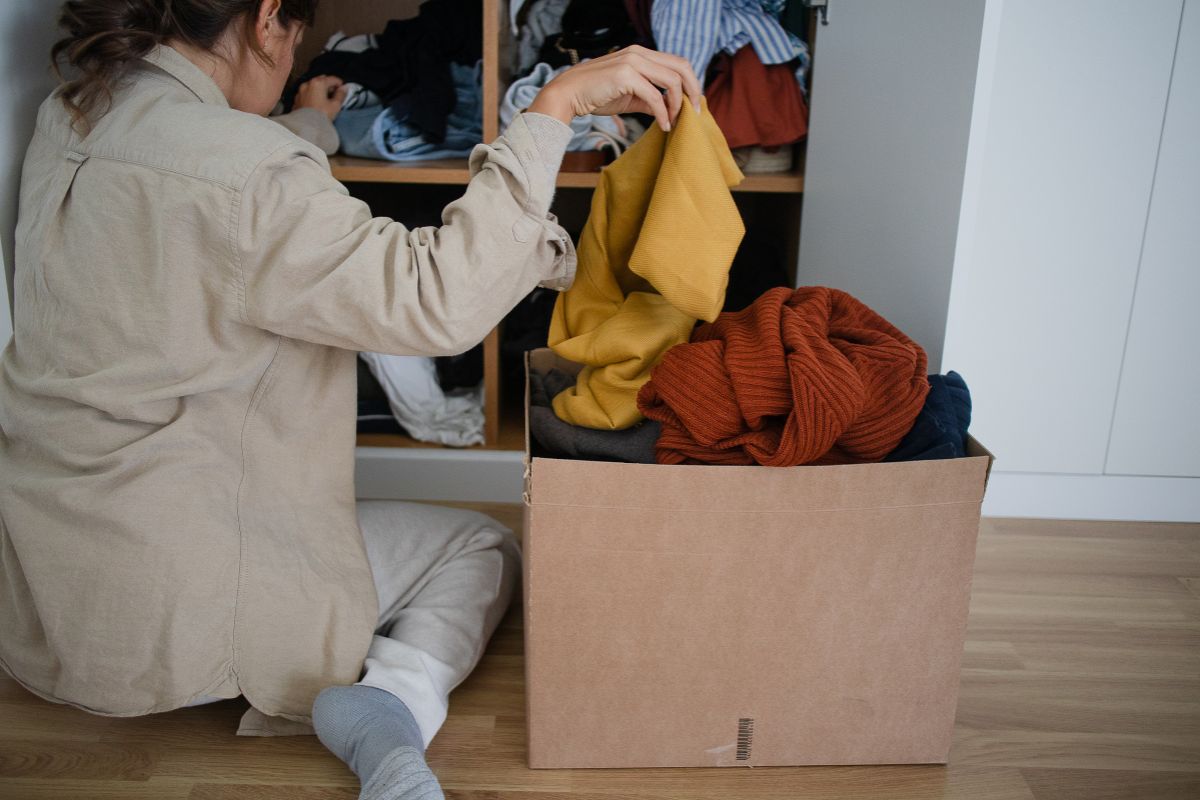
Pre-pack by decluttering, organising supplies, and clearing space to make moving easier.
Pack in Phases: Non-Essentials & Essentials
Once you’ve exchanged contracts and your move is confirmed, it’s time to start thinking about how to pack efficiently. A key to stress-free packing is tackling your belongings in phases.
Here’s a simple timeline:
Two Weeks Before Completion (or earlier if needed)
Begin by packing non-essential items, which are the things you won’t need until after the move. These include spare bedding, hobby equipment, home office supplies, or seasonal clothing.
Focus first on rooms you use less frequently, like spare bedrooms or storage areas, so your daily routine remains uninterrupted. This approach lets you make steady progress without feeling rushed, while gradually clearing space for the move.
As Completion Approaches
Once you’re done with the non-essentials, start packing everyday items that you can manage without for a few days, such as rarely used kitchenware, most of your wardrobe, toys, and extra bathroom supplies.
The goal is to have the majority of your home packed. Keep a small set of temporary essentials, like paper plates, cutlery, and bedding, to use during the final days in your current home. This ensures you can continue your daily routine while making steady progress toward a fully packed house.

Start packing everyday items you can do without, keeping just temporary essentials out for the final days.
The Day Before & Moving Day
By now, everything except your true essentials should be packed and ready to go.
Keep out the items you’ll need immediately after moving, including:
- Medication
- Important documents
- Chargers and electronics you’ll need immediately
- A change of clothes
- Toiletries and basic kitchen items for your first night
Store these in a clearly marked “moving-day box” so they’re easy to access and you don’t have to search through multiple boxes on arrival.
All other belongings should be boxed, labelled, and ready for your removal team to ensure a smooth and stress-free moving day.
How Can We Help
Moving house doesn’t have to be a headache. At Falconer Removals, our experienced team can handle everything from careful packing to safe transport, giving you peace of mind throughout the moving process.
Get in touch today to learn more about our packing services, or explore our blog for expert advice on moving house, packing, and preparing for your move.
