

A freezer is highly convenient for storing food and is a household essential in homes all across the UK.
That said, improper maintenance and storage can lead to a variety of problems, from unwanted damage to potential health hazards.
If you intend to store a freezer when it’s not in use, you need to ensure that it’s stored properly to keep it in the best possible condition.
To store a freezer when it’s not in use, you will need to:
- Empty the contents and defrost your freezer
- Thoroughly clean the freezer
- Choose an appropriate location to store the freezer
- Prepare the freezer for storage
- Inspect the freezer regularly
1. Empty The Contents & Defrost Your Freezer
The first step to storing your freezer when it’s not in use is to empty the contents and defrost it.
Donate or dispose of any leftover bits of food that could potentially go bad whilst it defrosts.
Once you’ve finished emptying the contents of your freezer, it’s time to start the defrosting process.
It can take anywhere ‘between 2 hours and 24 hours [for a freezer] to defrost naturally’. How long the process will take will entirely depend on how much ice there is, so don’t get caught out.
You will need to defrost your freezer at least 48 hours before you intend to store it in a storage unit.
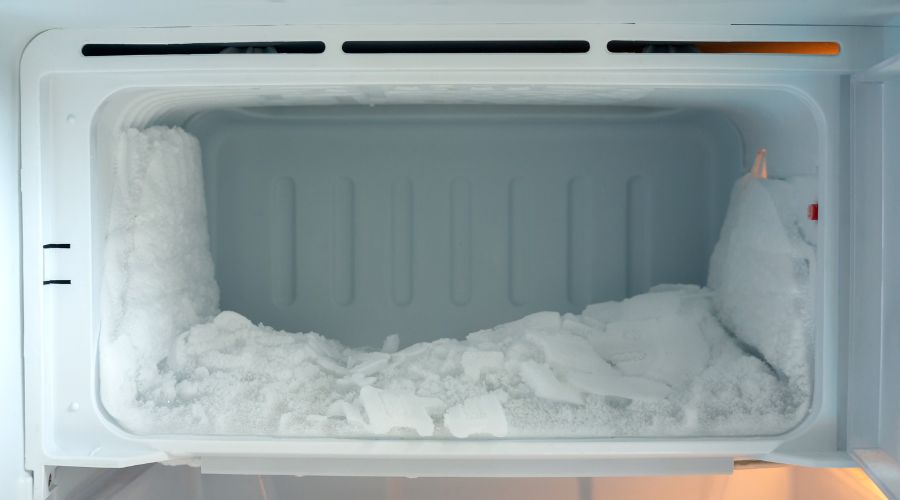
It can take anywhere ‘between 2 hours and 24 hours [for a freezer] to defrost naturally’.
2. Thoroughly Clean The Freezer
Once the freezer has completely thawed, you’ll need to thoroughly clean the freezer.
How you clean your freezer is up to you, but generally speaking, you’ll want to choose a mild cleaning solution or one that you make at home.
How To Clean A Defrosted Freezer
- Mix equal parts hot water and white vinegar in a spray bottle to make a cleaning solution.
- Spray the interior of the freezer with the cleaning solution, ensuring you generously cover the shelves and the drawers.
- Once the interior of the freezer is saturated with your cleaning solution, you can begin to clean it with a dry microfiber cloth. Make sure that you get every corner and crevice of the freezer.
- When you have finished cleaning the freezer, you’ll need to allow it to dry. You can do this by propping it open to ensure there is good ventilation and can speed the process up by drying it with a dry microfiber cloth. This will ensure that there’s no residual moisture to allow mould or mildew to grow.
- To clean the exterior, repeat the process. Wipe dry again.
3. Choose An Appropriate Location To Store The Freezer
Once you’ve thoroughly cleaned your freezer, you will need to choose an appropriate location to store it.
This might be at home somewhere if you have the space or in a storage unit if you don’t.
If you’re storing your freezer at home when it’s not in use, make sure the location is dry and away from direct sunlight to ensure your freezer remains in the best possible condition.
At Falconer Removals, we offer storage facilities in several locations, including Swansea, Llanelli, and more.
Should you wish to keep your freezer in storage be it long-term or short-term, get in touch with a member of our team today.
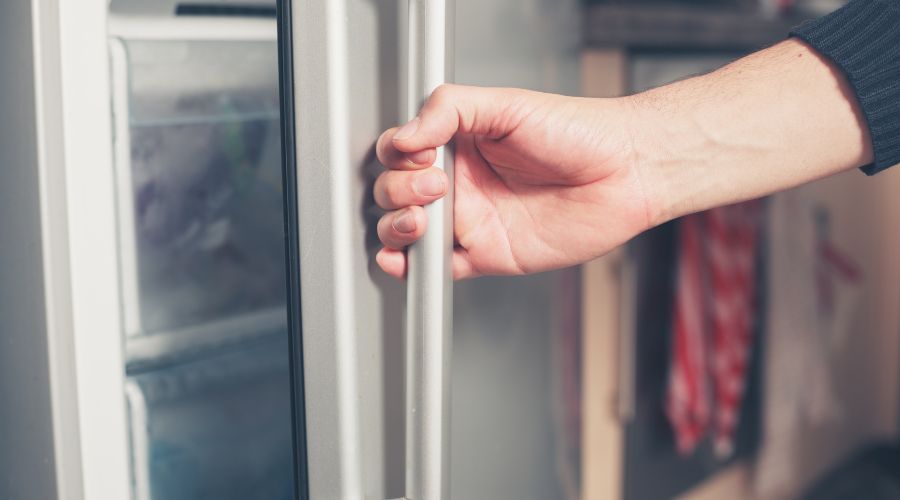
If you’re storing your freezer at home when it’s not in use, make sure the location is dry and away from direct sunlight to ensure your freezer remains in the best possible condition.
4. Prepare The Freezer For Storage
Next, you will need to prepare the freezer for storage.
Make sure that the freezer is sealed properly once it has dried and the seal isn’t tampered with. This is important as ‘broken freezer seals can cause warm air to leak inside and drop temperatures’, meaning you could have a health hazard on your hands when it comes to using your freezer again.
If your freezer is being taken into a storage facility, you can take an extra precaution to wrap it carefully in moving blankets ahead of time. This will protect it from any dust whilst it is in storage.
That said, when preparing your freezer, you’ll want to avoid taping the door shut. This will help to prevent leaving a sticky residue on your freezer.
If you’re storing your freezer at home, ask a family member or friend to help you lift it to a safe, dry location.
If you’re curious to learn how to prepare a fridge for storage, be sure to read our article here.
5. Inspect The Freezer Regularly
Whether your freezer is in storage at home or in a storage facility, be sure to inspect it regularly.
This will ensure that you catch any problems early before they lead to bigger problems.
For instance, if you’re storing your freezer in a damp garage at home, you will want to ensure that you move the freezer to a dry location.
By checking the freezer regularly, you’ll be in a better position to catch any damage before it’s too late.

Make sure that the freezer is sealed properly once it has dried and the seal isn’t tampered with.
We hope that this guide has given you a comprehensive understanding of how to store a freezer when it’s not in use.
At Falconer Removals, we use meticulous moving techniques, passed down and perfected through generations for over 132 years, to ensure your goods are moved with expert precision and kept in perfect condition. Get a quote from our team today.
For more expert advice on how to pack, move and store your belongings — or other FAQs on how removals work — check out our blog page.
Written by Jemima Thomas for Falconer Removals & Storage.
