
Published on 12/10/2023 & Updated on 05/11/2025
Vinyl records are a collectable item for many people. In fact, 2022 saw vinyl sales hit record high sales figures of £116.8m in the UK. However, this has changed somewhat in the years that have followed, with 2025 seeing figures increase by just 6% in the first six months, compared to 12.4% the year prior.
Regardless, keeping vinyl can be an expensive hobby, and some records can cost hundreds, if not thousands, of pounds. As such, if you’ve got an extensive vinyl range, you’ll want to ensure that it’s stored correctly. After all, failing to do so can mean not only ruining your hard-earned collection but also costing a significant amount of money, too.
Vinyl records can be delicate. However, they are widely regarded as one of the most robust recording formats, especially compared to other formats like tapes or CDs. Provided you keep them in the right environment, they can last for many years.
To help you preserve your precious collection, be it for moving purposes or long-term storage, we’ve created this guide on how best to store vinyl records.
Clean Your Vinyl Records Carefully
Before you can store your vinyl records, it’s important to keep them clean.
Vinyl records can attract dust, which causes unwanted static noise and can reduce the accuracy of the sound of your vinyl. Plus, occasional spills can pool on the surface, sometimes leading to mould growth.
These two aspects, combined with long-term storage, can create the perfect environment for all sorts of issues to develop on your records. From microbial growth to surface scratches, there’s nothing that ruins a vinyl faster.
When cleaning your vinyl, it’s generally best to use an anti-static vinyl brush or anti-static wipe to remove any dust or dirt from the grooves.
If you don’t have these items to hand, you can also use a microfiber cloth dipped in a mixture made of distilled water and Simple Green to remove the dust and static from your vinyl records.
How To Keep Your Vinyl Records Clean
- When the vinyl is playing, always make sure that the turntable cover is closed to minimise dust settling on the vinyl’s surface.
- Once you’ve finished playing your vinyl, before you put it back into its sleeve, wipe it with an anti-static wipe or use an anti-static brush to disperse the static charge.
- It’s essential to handle your vinyl records with care. Never allow the oil from your hands to be pressed into the grooves of the vinyl, as this can become a breeding ground for mould and can damage the records themselves. Only handle records with dry, clean hands, and try wearing finger cots to prevent damaging them.
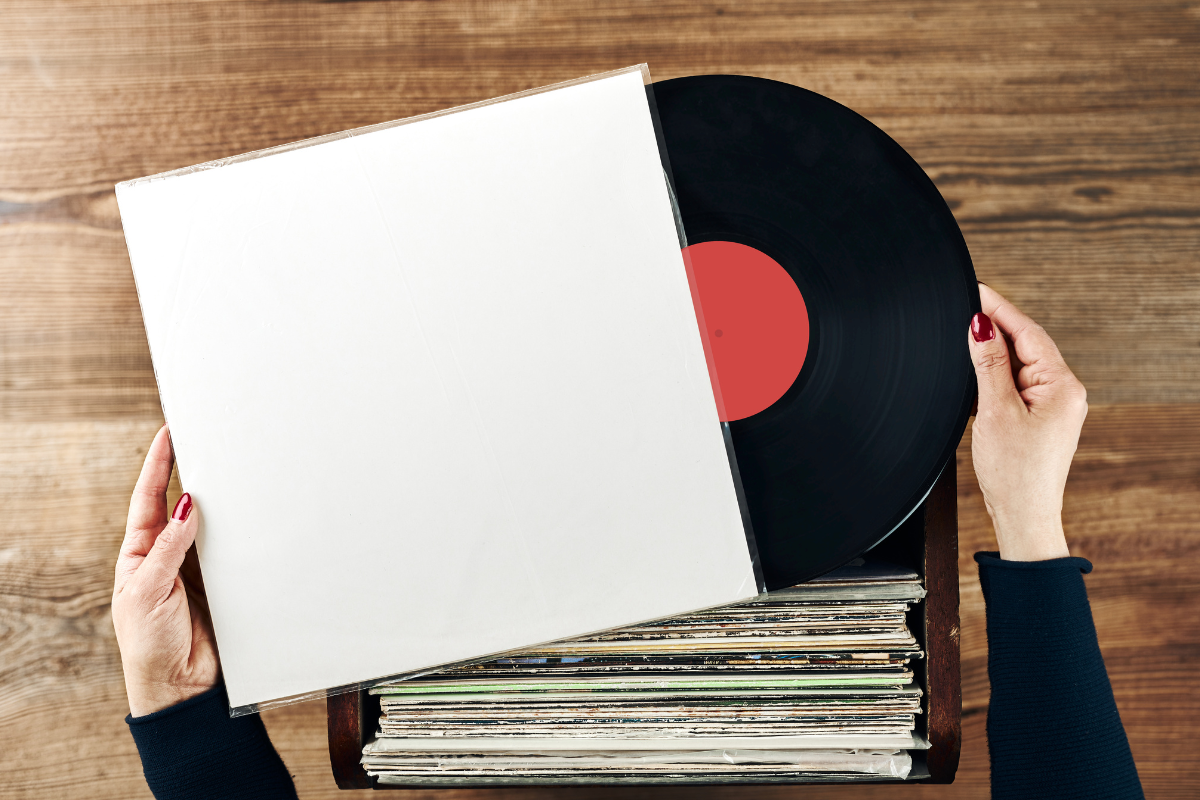
When cleaning your vinyl, it’s generally best to use an anti-static vinyl brush or anti-static wipe to remove any dust or dirt from the grooves.
Organise Your Vinyl Collection
The next step is to organise your vinyl collection.
If you have an extensive collection of vinyl records, this is a good opportunity to sort through to see if there are any you’d like to donate, give to family or friends, or throw away.
To do this, organise your collection into three separate piles. From here, you can see exactly what you would like to store and determine what you no longer want to keep.
How you organise your collection is completely up to you. You could go in alphabetical order or sort by genre – just be sure to remember your own logic for when it’s time to unpack it in the future.
Choose The Right Location To Store Your Vinyl Records
Once you’ve organised which vinyl records you’d like to keep, it’s time to choose the right location to put your vinyl records into storage.
This is perhaps one of the most important aspects to consider when it comes to storing vinyl. Ultimately, there are a few environmental factors that you’ll need to consider in order to find the best place for your vinyl to stay.
Temperature
The best vinyl record storage temperature is somewhere between 18°C and 21°C – not too hot, not too cold.
Beware: Large fluctuations in temperature from extreme hot to extreme cold and vice versa can cause your vinyl to gradually lose its shape. This means avoiding sources of heat like heaters and radiators, as well as non-insulated external walls.
Light Exposure
Although vinyl records can stand up to occasional bursts of light exposure from lamps and sunlight, prolonged exposure can quickly damage them. Ultraviolet light in particular can be a killer for your precious record collection, so be sure to keep your records well covered and hidden from harsh light sources.
Not only can light damage the actual record itself, but the sleeves themselves can become bleached if they’re left in the sun. As such, you should avoid this as much as you can when storing it away.
Humidity
Similar to temperature, vinyl records should ideally be stored in a dry environment with minimal humidity. While records themselves are naturally water-resistant, the same can’t often be said for their sleeves, which are often made from paper/card.
Before storing your records, consider leaving them in a room with a dehumidifier for a few hours to reduce humidity. This will extract as much moisture as possible, reducing the risk of mould.
Movement
As previously mentioned, vinyl records are one of the most physically sound recording formats. However, stability is crucial when transporting your records from one place to another.
Similar to how vibrations can ruin hard drives, the same can be said for your precious records. So, when you’re taking your records to their final resting place, try to avoid as many speed bumps and potholes as you can. This can prevent them from jumping around and causing a ruckus.
Convenience
Whether you use your vinyl records on a daily basis or less frequently, make sure that wherever you choose to store them is accessible and convenient for you.
You’ll want to ensure that your vinyl collection isn’t too far from your record player. Though you can always move your record player to accommodate your new storage solution.
Learn more about how to pack a record player here.
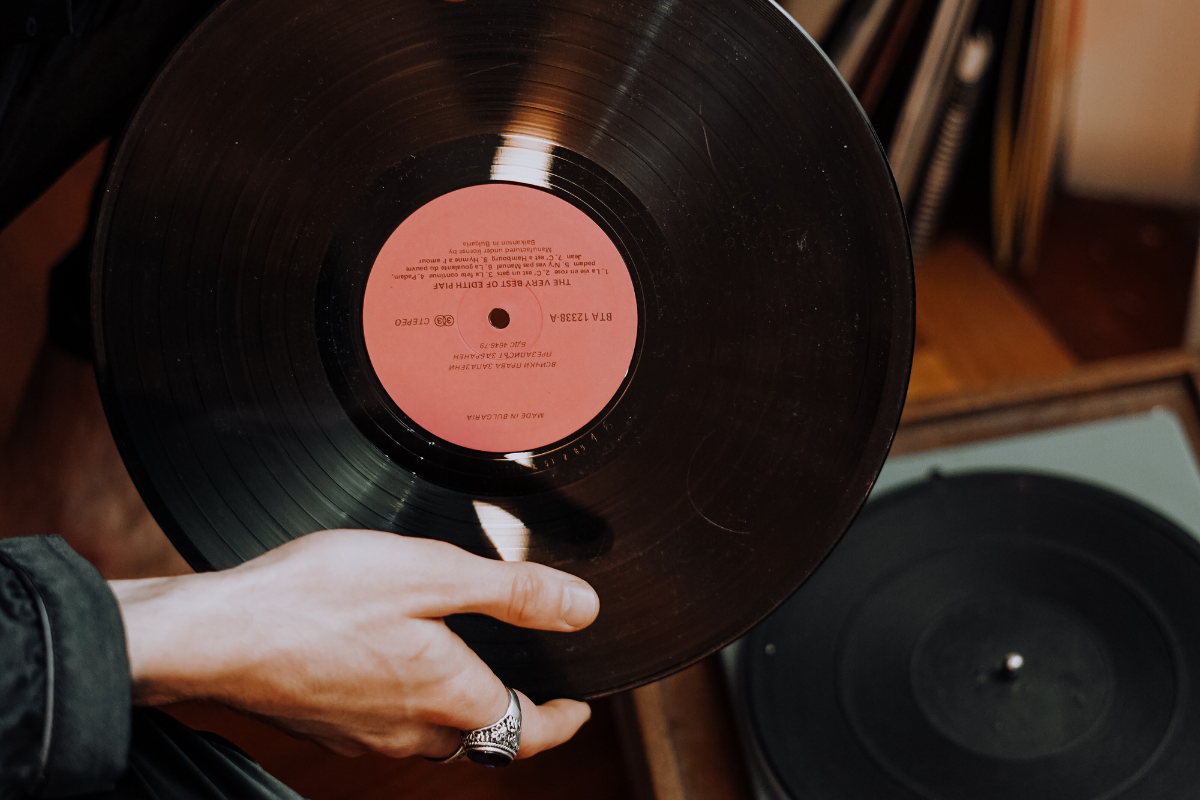
Vinyl records are a collectable for many people, emphasised by the fact that ‘UK vinyl sales hit a record high in 2022 at £116.8 million’.
Find A Storage Solution
Once you’ve found the right location to store your vinyl record collection, you’ll need to find the right storage solution.
How you store your vinyl collection is up to you and your budget. That said, you won’t want to store your vinyl collection in large bins on top of each other, as this can put a significant amount of pressure on your vinyl records.
Instead, you should try to opt for a shelving solution that allows you to store your records in a way that keeps them separated and organised.
Alternatively, if you don’t have the space or the budget for shelving, you could also try storing your records with sturdy dividers.
Store Your Vinyl Records Upright
The best way to store vinyl records is upright, in a vertical position in their sleeves.
Storing your vinyl records upright will ensure that they remain in the best possible condition and protect them from warping over time in storage.
Additionally, storing your vinyl record collection upright makes the most sense to allow you to browse and choose records with ease.
Need to Store Your Records? Trust Falconer
So, that’s how you properly store your vinyl records. Hopefully, this guide has helped you organise and store your vinyl records.
To learn more about our removals services or purpose-built storage facilities, contact Nathan. At Falconers we use meticulous moving techniques, passed down and perfected through generations for over 132 years, to ensure your goods are moved with expert precision and kept in perfect condition. For more expert advice on how to pack, move and store your belongings — or other FAQs on how removals work — check out our blog page.
Written by Jemima Thomas for Falconer Removals & Storage.
