
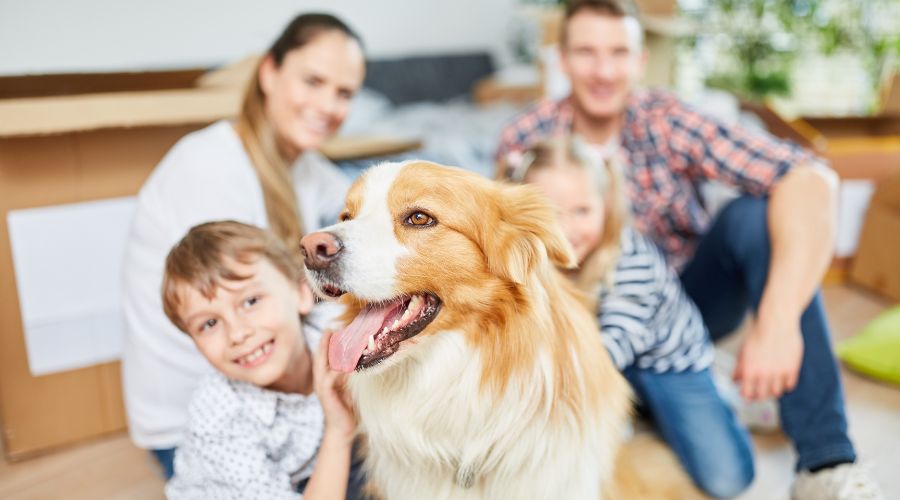
When it comes to planning a house move, there’s a lot to think about, especially when moving with a dog.
In short, the answer to this question is yes, dogs are very perceptive creatures and get stressed when moving house, especially if you’re stressed yourself.
In fact, ‘researchers [have] found dogs’ stress levels were greatly influenced by their owners’, so if they can sense that you’re stressed when moving, they’ll feel it too.
Dogs don’t have the same understanding as humans, and will likely feel unsettled and uncomfortable if you don’t lay the groundwork ahead of the move.
Some dogs are more likely to be impacted by moving than others, but as their owner, it’s your responsibility to make sure you minimise their stress as much as possible.
To reduce your dog’s stress before moving day, you will need to:
- Practise obedience commands
- Update your dog’s ID tag
- Get your dog used to packing boxes
- Introduce your dog to a travel crate early
- Keep their old bed to keep them calm
1. Practise Obedience Commands
Making sure your dog has mastered obedience commands before you move house is essential and can make the difference between a seamless moving experience and a highly stressful one.
There is a wealth of information on dog obedience training that will help you to teach or reinforce basic obedience commands including stay, sit, and heel, to name a few.
This is important to ensure you have full verbal control of your dog during the move, even in stressful situations.

Dogs are very perceptive creatures and get stressed when moving house, especially if you’re stressed. In fact, ‘researchers [have] found dogs’ stress levels were greatly influenced by their owners’, so if they can sense that you’re stressed when moving, they’ll feel it too.
2. Update Your Dog’s ID Tag
Your dog’s safety will be your largest concern, so in the lead-up to the move, ensure your dog is microchipped and update their ID tag.
You will need to add your current mobile number to your dog’s ID tag, not your landline number, as you’re moving to a new home and a new area.
After all, the last thing you want is to be faced with a situation where your dog is lost and people are ringing a number you no longer have access to.
3. Get Your Dog Used To Packing Boxes
Some dogs react negatively to packing, particularly if they associate your packing with being dropped off at the kennel.
Knowing how to pack boxes can be difficult to navigate with an excitable dog. While it might feel easier to hide packing materials or pack when you’ve put your dog in another room, they need to get used to the sight and sound of packing materials.
As the moving process is going to be ongoing, make sure that you get your dog used to packing boxes well in advance of the move to keep them as calm as possible when the day arrives.
To learn how to pack boxes, check out our article.
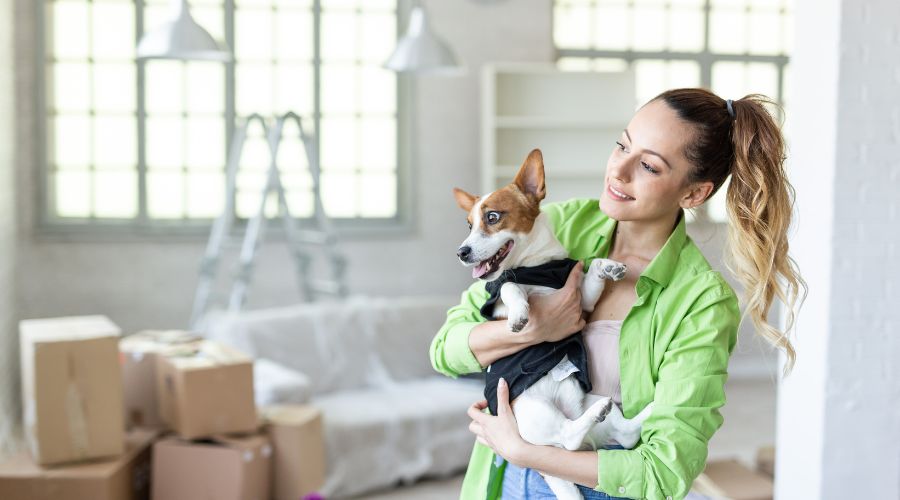
It’s no secret that ‘sniffing can be self-soothing [and] reduce stress’ for dogs, and keeping their old bed will help to create a familiar environment for them despite being in a foreign space.
4. Introduce Your Dog To A Travel Crate Early
To prevent your dog from getting stressed when moving, you’ll need to make sure that you introduce your dog to a travel crate early.
This is especially important if your dog has never been crate trained, as it can be a foreign and stressful experience for dogs in the very beginning.
Prepare for this to take some time, especially if your dog is used to roaming free around the house, as old habits die hard.
Have patience and remain calm during the crate training process, as having a crate that your dog is comfortable in can provide a safe place during the move and can also help your dog to settle into a new home.
The more you encourage your dog to use a travel crate, the more it will normalise the moving process for them.
5. Keep Their Old Bed To Keep Them Calm
You might think moving house is the perfect time to buy your dog a new bed, but this isn’t the case.
To ease your dog’s stress when moving, one of the best ways to keep them calm is to keep their old bed and bedding for the new home.
It’s no secret that ‘sniffing can be self-soothing [and] reduce stress’ for dogs, and keeping their old bed will help to create a familiar environment for them despite being in a foreign space.
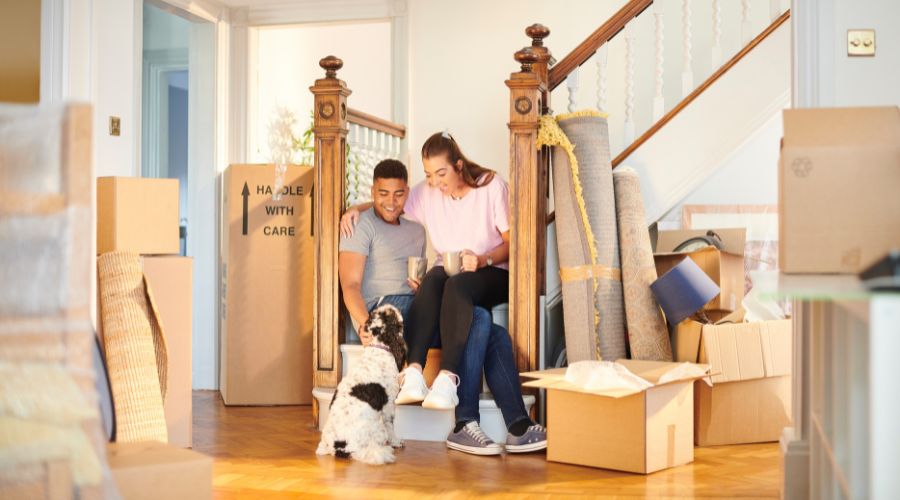
Some dogs are likely to be impacted by moving more than others, but as their owner, it’s your responsibility to make sure you minimise their stress as much as possible.
Tips For Moving House With A Dog
Reduce Your Dog’s Food Consumption The Night Before
Dogs can experience motion sickness, particularly if you’re travelling long distances.
That said, your furry friend will be much more comfortable without a full stomach during the journey.
Additionally, your dog might feel out of sorts for a few days following moving, so be careful to slowly build up their food intake whilst their stomach is still recovering.
Put Them In A Quiet Room Or Daycare
With a removal company coming in and out of the house, the safest thing to do is to put your dog in a quiet room away from the moving process or in daycare.
You can give them toys, and create a quiet environment they can relax in until you’ve finished. This will help to keep your dog calm, and will also keep the people helping you move safe.
Alternatively, putting your dog in daycare or asking a friend to take care of them can allow you to set up their new home to minimise the moving stress.
Hopefully this article has given you a better understanding of how to manage your dog’s stress when moving house.
To learn more about our removals services or purpose-built storage facilities, contact Nathan. At Falconers we use meticulous moving techniques, passed down and perfected through generations for over 132 years, to ensure your goods are moved with expert precision and kept in perfect condition. For more expert advice on how to pack, move and store your belongings — or other FAQs on how removals work — check out our blog page.
Written by Jemima Thomas for Falconer Removals & Storage.
