

Updated on: 11/12/2023
Photos allow us to remember the special moments in our lives. Despite the fact that there has been a shift to smartphone cameras to capture these moments, there are still lots of people who prefer a physical print. Not to mention that there are plenty of older photos still in circulation; most families I know have hundreds of physical photographs stored away in albums that make a special appearance a few times a year. Whether it’s snaps from your 21st birthday celebration, the first (or last) wedding you attended, or your oldest baby photos, it’s nice to keep hold of these postcard-size memories to treasure for years to come.
The downside of having photos? These photographs can become damaged over a long period of time. It is therefore important that you assess your photos as soon as possible, and make steps towards storing them long-term in a manner that will keep them in prime condition. Lucky for you, we’ve rounded up our top tips for storing photographs long term, to ensure they stay in good condition for everyone to enjoy.
To store photos long term like the experts, you should:
- Hire a purpose-built and climate-controlled storage space
- Assess your photos
- Clean your photos
- Put photos in an acid-free album (if required) and prepare for storage
- Keep photos flat
1. Hire a Purpose-Built and Climate-Controlled Storage Space
Not all storage spaces are made equal; go for one that has been built to protect all of your items over time. In an ideal world, this will be a purpose-built storage unit that is climate-controlled, clean, under surveillance and insured. Climate control is the most important factor for photos as fluctuations in heat and condition can cause long-term and irreversible damage.
If you aren’t able to get your hands on a purpose-built storage space, make sure you store your photos in a cool, dry space. Avoid areas prone to temperature fluctuations and humidity, as these can accelerate the degradation of photos. Find out what else to look for in a storage unit in our article on the subject.
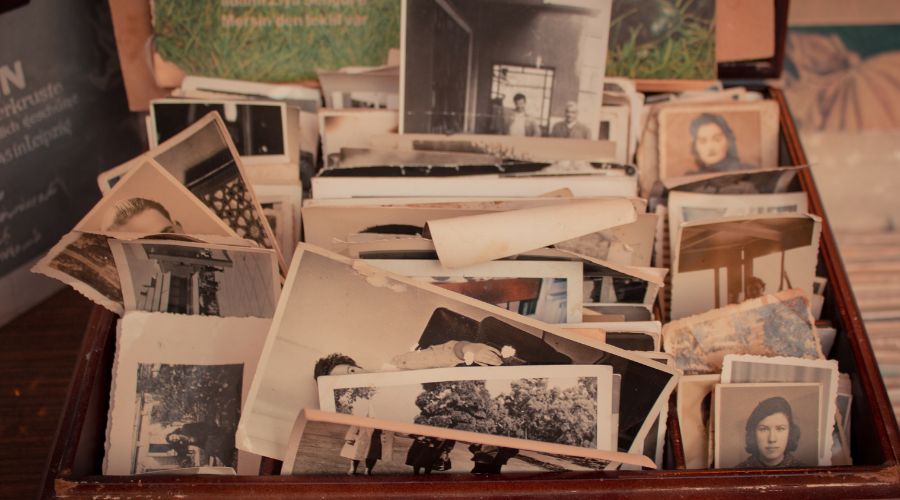
Light, especially sunlight and fluorescent light, can also cause fading and discoloration, so keep this in mind when storing in your home.
2. Assess Your Photographs
At Falconer Removals, we are big fans of a good old clear out. Now is the best time to spend time going through your photographs to determine which ones you want to keep. If you have the time, you can even begin sorting them into piles according to date/event for when you put them in an album. As we said before, photos are treasured memories so you might know that you want to keep them all. Even if this is the case, you should still assess the condition of your photographs.
If your photographs have been tucked away for a long-time, in particular if they have been kept in boxes without protection or structure, they might have been subject to some wear and damage. The biggest cause for concern here is mould: while it is unlikely your photographs would have developed mould, it is not impossible. If you find photos with mould then, separate them from the rest as it can spread to your other photographs. If your photographs are sticking together when you go to do this, you should slowly peel them apart to avoid ripping or damaging the print.
3. Clean Photos
Now you’ve got your photos sorted, give them a good (but delicate) clean. All of our belongings are subject to a build up of dust and grime over the years when kept in unsuitable storage in shoeboxes, cupboards, attics and spare rooms, but a delicate wipe with a microfibre cloth should clear this up.
Some people recommend a small amount of saturated alcohol on the microfibre but this has received mixed results. To air on the side of caution, we recommend that you try with a small amount of oil on a microfibre instead — as detailed in the video below. Proceed with caution though; it is always best to test new cleaning methods on a small section first, or on an unimportant photo.
If there are are photos with mould or other tough grime, you should take them to a cool and dry area to dry out. According to Hunker, if the mould has turned from a solid to a powdery state after this, you can brush the powdery mould off of the photographs with a soft paintbrush or a microfiber cloth and clean it as you have the others. Once this is done, you should be able to return your photos to storage without fear.
4. Put Photos in Albums and Prepare for Storage
With clean and organised photographs at your side, it is time to put them in albums and prepare them for storage. We’d recommend an album that is acid-and lignin-free with PVC-free pockets to keep your photos in prime condition as other types of photo album can cause more damage than it prevents. This is similar to why you should store magazines in an archival bag as they offer adequate protection against handling, dust, pollen and moisture. For extra protection, you can wrap your albums in bubble wrap, but this is not essential.
Once finished, you can pop your photo albums in a cardboard box. At Falconer Removals, we use triple walled boxes to ensure your items are safe and sound when in transit. As with most furniture that goes in a box, empty space where the albums could shift around and get damaged should be filled with protective packing materials.

If you have a large quantities of photos, to the point where it is impossible to find the time to put them all in albums, you can layer them between sheets of acid-free paper in photo archive boxes that can be kept in storage as is.
5. Keep Photos Flat
Last but certainly not least, you should be storing your photos flat rather than rolled or folded to prevent creases and damage. These types of physical distortions can be challenging or sometimes even impossible to reverse, so prevention is key. Keeping photos flat also preserves the integrity and quality of the image. Distortions caused by bending or creasing can negatively affect the emulsion layer, resulting in cracks or separations that reduce the quality of the photograph.
If using albums, ensure they are designed to support the weight and size of the photos.
And that’s it! If your storage team are collecting your items, make sure you are adequately prepared for their arrival, and then the rest is down to them; you can rest assured your belongings are in safe hands from this point on.
–
At Falconers we use meticulous moving techniques, passed down and perfected through generations for over 132 years, to ensure your photos and photos albums are moved and kept in perfect condition.
To learn more about our storage facilities, or our removals service, take a look at out our website or contact Nathan.
–
Written by Holly, for Falconer Removals.
