

There are lots of good reasons you might need to store your microwave, but it’s important to do it right to avoid long-term damage to the appliance. A quality microwave is built to last up to 10 years so, as long as you look after it, it can have a long life – even once its been in and out of storage. We’ve compiled six simple steps to help you store your microwave like the experts, and prevent long-term damage:
- Stop using your microwave.
- Clean it inside and out.
- Remove glass and other delicate parts.
- Unplug and disconnect from mains.
- Pack and prepare.
- Hire a reputable storage unit.
1. Stop Using Microwave
Stop using your microwave for as long as possible before it goes into storage. There is no set timeline, just give yourself enough time to clean and prepare your microwave for the date you plan to store it. When it’s inactive, keep the door open to air it out before you clean it.
The same goes for preparing your dishwasher, washing machine and fridge for storage – the longer you stop using them before you store them, the better. This is more important for these three appliances as they need to be defrosted/drained, cleaned and dried before storage.
2. Clean Microwave Inside and Out
This step is crucial: your microwave needs to be clean before it goes into storage. This might seem obvious, but if your microwave goes into storage with built-up grease and food residue, it will not be useable when it comes out. The good news? It doesn’t take long to clean and freshen, and it can be done with just a few household items.
You can use a generic all-purpose cleaner to clean your microwave but I always fall back on the lemon, vinegar and water in a a microwaveable bowl method. If you’re not sure what that is, it’s these three ingredients, in a microwavable bowl, on a medium-high cycle in your microwave.
The steam from the lemon and vinegar loosens the dirt and grime in your appliance, making it easier to wipe clean in seconds.
You can also leave a cup of baking soda in your microwave to absorb leftover strong odours – but make sure to remove this before it goes into storage.
3. Remove Glass and Delicate Parts
The glass plate inside of your microwave is delicate, and can smash when your microwave is on the move. To prevent breakage, remove the plate from your appliance before the next step and wrap it in protective materials (like bubble wrap) or a towel/blanket.
4. Unplug and Disconnect from Mains
Next, unplug your microwave from the mains. You can store the plug inside the microwave for safekeeping, as long as it won’t cause damage when inside.
If you have an attached microwave, refer to your appliance’s manual or this guide to find out how to disconnect a microwave. If you’re not confident, you can see if your removals or storage team will do it for you. At Falconer Removals, we will disconnect and reconnect all appliances for you.
5. Pack and Prepare Microwave
You can pack your microwave in a strong cardboard box, surrounded by packing materials or soft items to keep it safe and secure. Make sure your microwave is stored upright, and without heavy items on top of it.
At Falconer Removals, if you’re storing multiple appliances, we’ll make sure that they are kept in one storage container to prevent damage to your other, more delicate furniture. Regardless of whether you use a storage service, you should keep this in mind.
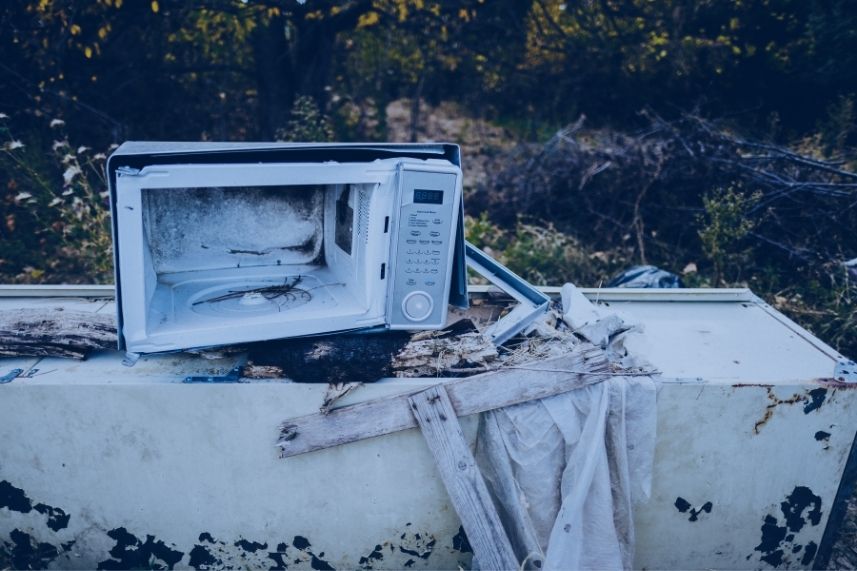
This might seem obvious, but you should never store your microwave (or other appliances) outside. Even under a cover, these appliances are susceptible to rust and permanent damage.
6. Hire a Reliable Storage Unit
If you’d like your microwave and other appliances packed and stored with care, you can hire a reliable storage unit to take care of it for you. To find a reliable storage service, you should refer to Google Reviews – the better the reviews are, the more trusted the service.
You should also choose a storage unit with climate control, as this will protect your microwave (and other appliances) from damage. If you need more guidance, read our post on what to look for in a storage unit here.
–
To find out more about our removals and storage services, contact us.
For more tips and tricks, check out our articles, including how to move and store like the experts, how to prepare your furniture for storage and how to cope with the stress of moving house.
—
Written by Holly Charman, for Falconer Removals.
