
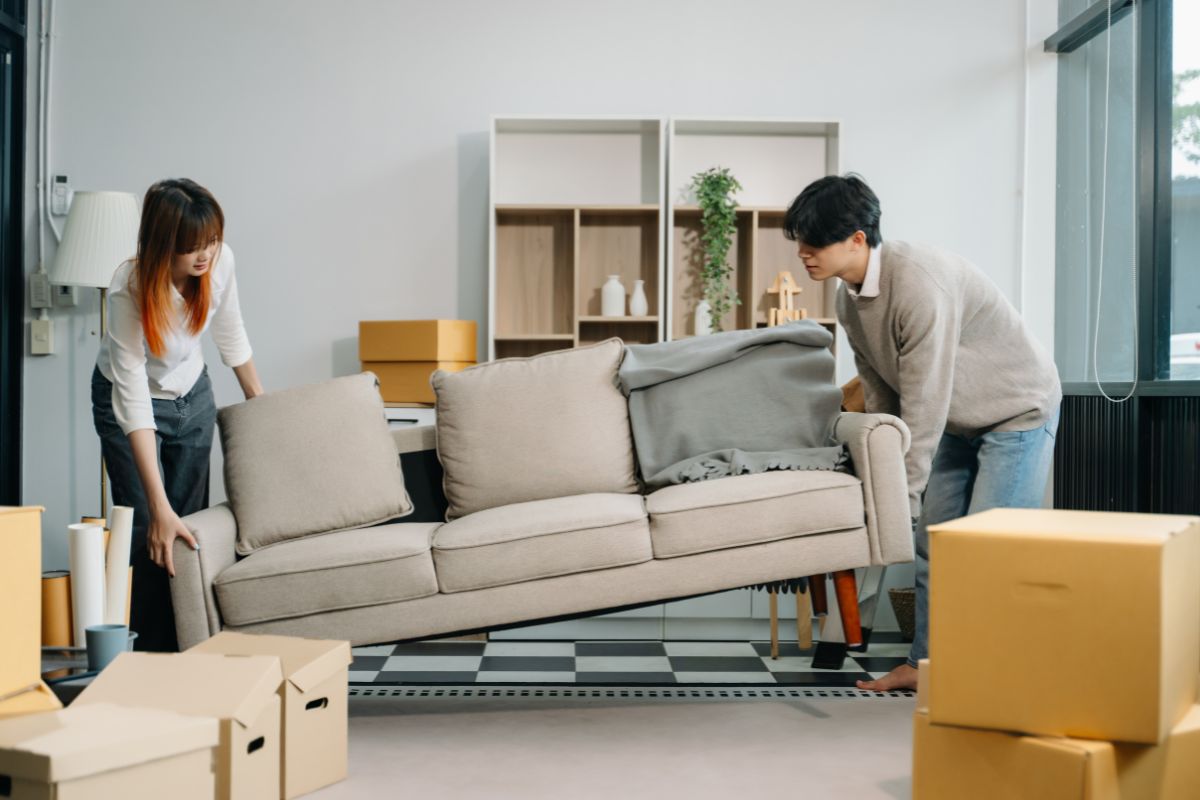
Sofas are one of the hardest items to move during a house move. They’re bulky, heavy, and easy to damage if they’re not properly protected.
In fact, around 37% of people who experienced damage during a move said they didn’t spend enough time packaging their items properly, highlighting just how important careful preparation is.
From tight doorways to rubber door seals and shifting loads, sofas face many hazards during a move. Understanding the steps professional removals teams take can help you see how your furniture stays protected.
In our How to Pack a Sofa for Moving guide, we’ll explain the expert techniques movers use to pack and safeguard sofas, ensuring your furniture arrives in perfect condition.
1. Assess Your Sofa Before Moving
Before you even think about moving a sofa, it’s important to understand what you’re dealing with. Not all sofas are the same, and how they’re handled depends on their size, shape, and design.
- Standard sofas usually move as a single piece, with no parts removed. These are the typical living room sofas you see every day, like a three-seater fabric sofa or a non-reclining modular sofa.
- For larger or more complex sofas, such as electric recliners, professional movers often remove backs or components to make lifting and manoeuvring safer.
Taking a few moments to check whether your sofa can be dismantled, as well as identifying which parts need extra care, helps plan the move and avoid unnecessary damage.

Check your sofa type before moving. Standard sofas often move as one piece, while electric recliners have removable parts that require safe handling.
2. Protect the Sofa in the Room
Once you know what type of sofa you’re moving, the next step is protection. Nearly 48% of people report experiencing at least one damaged or broken item during a house move, and large furniture, like sofas, is among the common casualties.
This shows how much protection matters when moving bulky items, as sofas and other large items like furniture can easily get scratched or scuffed during handling.
Professional movers take the following steps to protect sofas from scratches, scuffs, and marks during handling:
- Cover the sofa with a polythene or protective cover. This acts as the first line of defence against scuffs, stains, and accidental bumps, even for robust sofas that don’t disassemble.
- For sofas with removable parts, cover each section individually to ensure all surfaces are protected.
Taking the time to wrap and protect your sofa before it moves ensures it stays in great condition from the very start of the move.
3. Protect Doors and Door Frames
Even a well-wrapped sofa can be damaged if it brushes against walls, door frames, or rubber seals. Tight doorways are one of the trickiest parts of a move, and without careful protection, sofas can easily get dented or marked.
Professional movers always plan the route through the house in advance. Knowing exactly where the sofa will go and where any tight spots are prevents scratches and ensures the move goes smoothly.
Professional movers also take precautions at this stage to prevent damage:
- Pad doors and door frames to create a buffer between the sofa and hard surfaces. This prevents scratches, dents, and stubborn black marks from rubber door seals.
- Pay attention to the top of the sofa, especially tall models, to make sure it doesn’t rub against door frames or seals.
- Move the sofa carefully through narrow spaces, turning or tilting it slowly to avoid contact with walls or edges.
These precautions show that protection isn’t just about wrapping the sofa; it’s also about managing the environment it passes through.
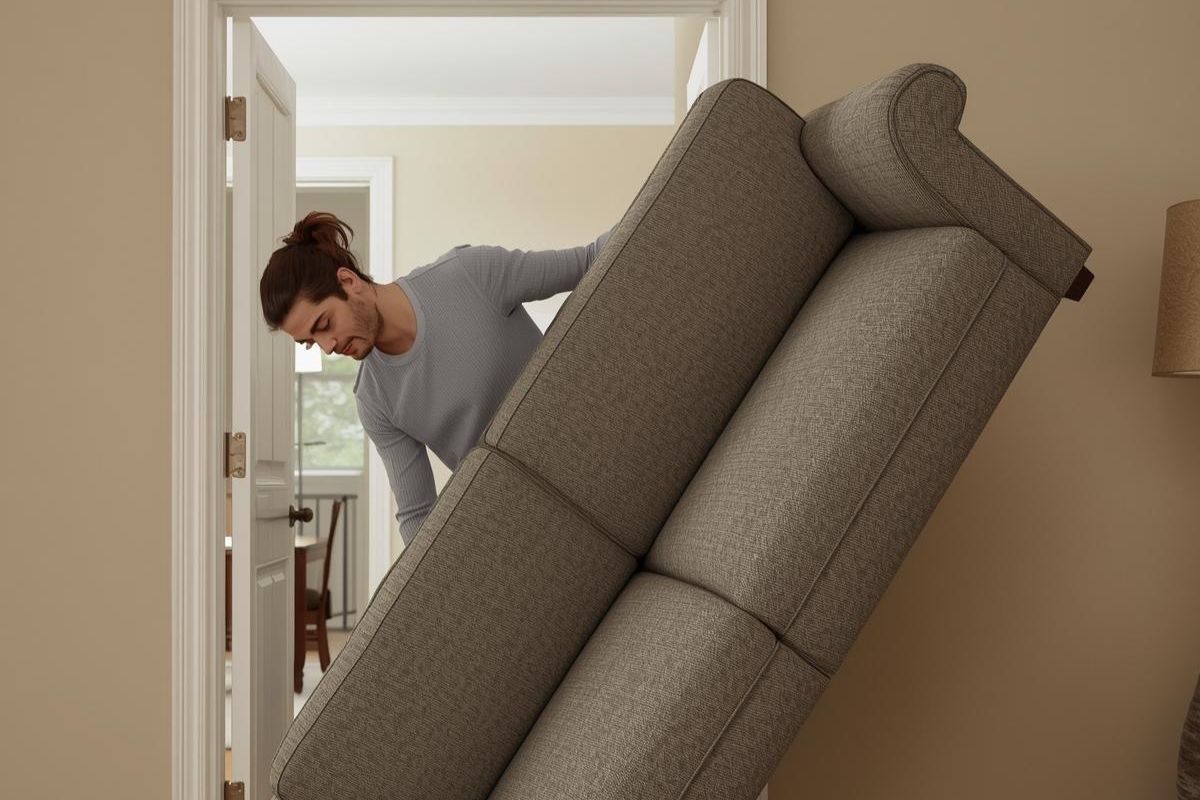
Careful planning and padding around doorways and tight spaces keep the sofa safe as it is moved through the house.
4. Loading the Sofa Into the Van
Once the sofa has safely passed through the house, the next critical step is loading it into the removal van. This stage is just as important as protection in the room and through doorways, as improper loading can cause shifting or damage during transit.
Professional movers follow these key steps to keep your sofas safe during transport:
- Position the sofa upright on its feet whenever possible. This is usually near the front section above or just behind the driver’s cabin. This elevated space is stable and out of the way, making it ideal for safely transporting large items.
- Use thick transport blankets to cover the sofa once it’s in the van. This prevents contact with other furniture, van walls, or any sharp edges.
- Avoid contact between furniture items or with the van itself. Even minor rubbing during the journey can leave marks, so padding and careful placement are essential.
- For very tall sofas that don’t fit upright, they may be placed on their side. This requires extra care and padding to prevent damage and keep the sofa stable.
These steps show the level of care professional movers take to ensure your sofa arrives in perfect condition. Proper positioning, combined with padding and secure placement, reduces the risk of damage during transit.

Professional movers carefully position and pad sofas in the moving van to prevent contact, ensuring they arrive at the new property safely.
How We Can Help
If you’re wondering how to pack a sofa for a house move, remember that protection should also be a focus, not just packing. The key is to ensure your movers prevent contact between furniture items, as well as the sofa and the moving van itself.
At Falconer Removals, our professional movers take care of every stage, including wrapping the sofa in protective covers, padding doors and frames, and carefully positioning it in the van. These measures safeguard your furniture and give you peace of mind on moving day.
To learn more about our removals services in South Wales or our purpose-built storage facilities, contact us at info@falconerremovals.co.uk.
