

Necklaces are often sentimental and expensive additions to our wardrobe. Whether your necklace is worn on a regular basis, or brought out just for special occasions, it can add those all important finishing touches to an outfit.
It is therefore important to pack and move them well, to keep them untangled and in pristine condition, so you can wear them for years to come.
We have written this expert guide to help you do just that!
To pack necklaces for a move, you will need to:
- Clean necklaces with care
- Pack in special jewellery boxes or use the straw method
- Put your necklaces in designated boxes
- Label your boxes
1. Clean Necklaces With Care
Before you can pack your necklaces, you’ll first need to clean them with care.
As with most things, necklaces collect grime and dirt over time. Silver necklaces in particular are susceptible to tarnishing and discolouration. In fact, it is inevitable that your necklaces will lose their sparkle over time.
This is a natural reaction to moisture and sulphur in the air causing a thin dark layer to form on the surface – in particular if the necklaces have been in contact with perfumes, body lotions or sweat and sunlight.
Moving is the perfect chance for you to give them a good clean and refresh, before you put them in a box and move them into your new home.
The best part is that you can clean most jewellery with warm water, washing up liquid, a small bowl, and a soft cloth that doesn’t scratch.
You can even use baking soda and aluminium foil, as detailed in this video from Madeline Della Mora.
2. Pack in Jewellery Boxes Or Use The Straw Method
Without a doubt, the best way to keep your necklaces safe it to store them in a jewellery box that has been designed to keep necklaces stationary and safe in transit.
If you haven’t got access to a box, or enough boxes to store all of your necklaces, you can try the straw method.
To use the straw method, simply open the necklace and thread the chain through the straw, closing the clasp at the top.
The straw will keep the chain from moving too much and creating knots. You can pop these in little bags or other boxes to keep them safe. For extra protection, wrap in a small layer of tissue paper.

If you haven’t got access to a box, or enough boxes to store all of your necklaces, you can try the straw method.
3. Put Necklaces In Designated Boxes
Now your necklaces are packed, make sure to put them in another box that is secure and labelled – something like a a small Tupperware box will do the trick.
If you used the straw method, we’d recommend that you stack the straws in a smaller box and separate each one with bubble wrap and a thin layer of cardboard.
With care, place each of your boxes inside of the tub and position them snug.
As we’d recommend with most items, make sure to fill empty space in the box with bubble wrap or packing paper to prevent the boxes inside the tub (or other box) from moving around when in transit.
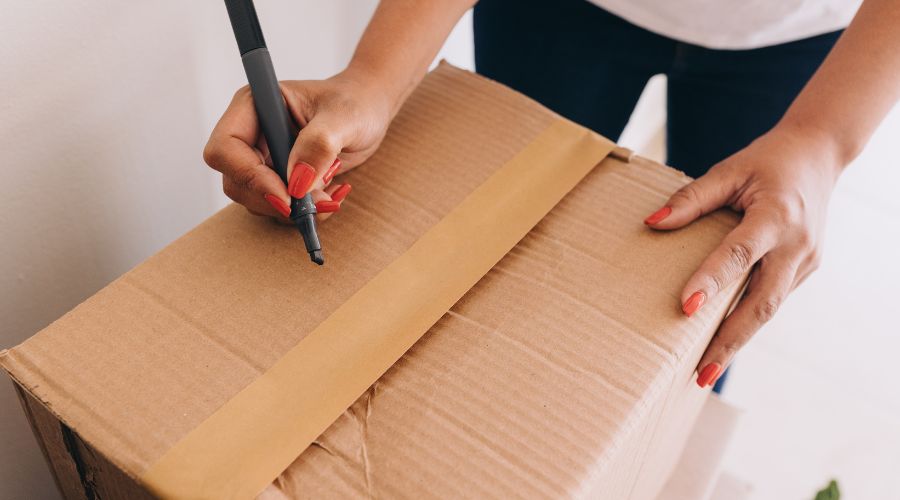
Labelling your boxes carefully is important to indicate to the removal company to take care.
4. Label Your Boxes
Once you have sealed your boxes with packing tape, you will need to label them.
Write “FRAGILE” or “TAKE CARE” on the boxes to remind yourself as well as the professional removal company that the boxes have expensive and sentimental necklaces inside.
That being said, if you’ve packed it snug and with protective materials, your necklace collection should be OK with a little movement when moving house.
So, there you have how to pack necklaces for moving. We hope that this guide has been informative, and you now feel confident packing your precious necklaces.
To learn more about our removals services or purpose-built storage facilities, contact Nathan. At Falconers we use meticulous moving techniques, passed down and perfected through generations for over 132 years, to ensure your goods are moved with expert precision and kept in perfect condition. For more expert advice on how to pack, move and store your belongings — or other FAQs on how removals work — check out our blog page.
–
Written by Holly, for Falconer Removals.
